Jackson County Dog Registration Information
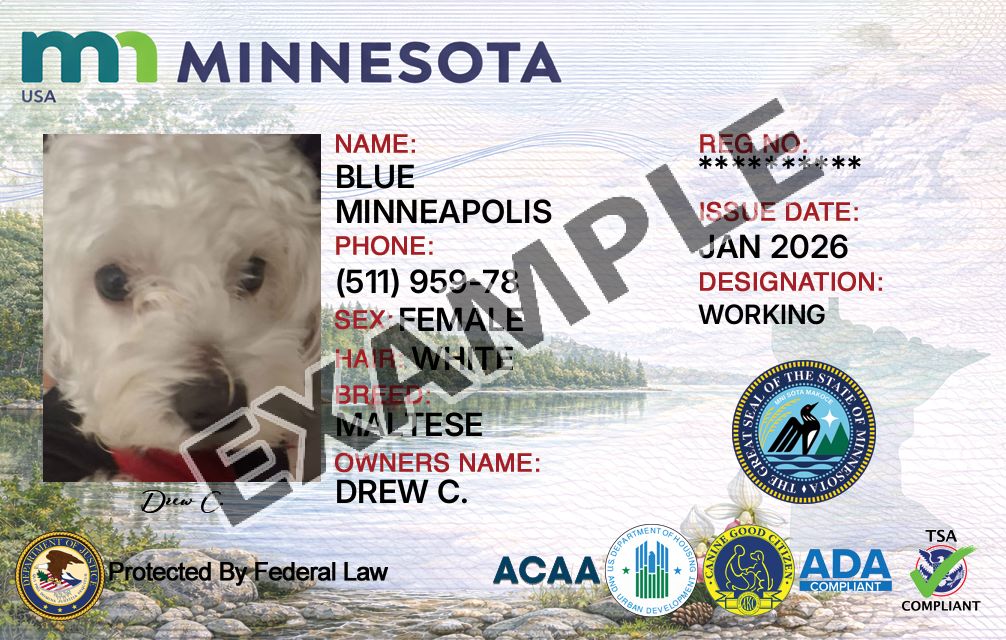
Service Dogs and Emotional Support Animals in Jackson, Minnesota
If you’re searching where do I register my dog in Jackson County, Minnesota for my service dog or emotional support dog, the answer usually depends on where you live inside Jackson County (for example, inside a city such as Jackson or Lakefield versus a rural township address). In Minnesota, dog licensing is commonly handled at the local level—often through a city clerk/city hall or another local government office—while rabies rules and bite investigations may involve law enforcement or public health requirements.
This page explains how a dog license in Jackson County, Minnesota typically works, what to bring (especially rabies vaccination proof), and how licensing differs from a dog’s status as a service dog or an emotional support animal (ESA). It also includes several example official offices you can contact when figuring out where to register a dog in Jackson County, Minnesota.
Where to Register or License Your Dog in Jackson County, Minnesota
Because licensing is often administered locally, the offices below are common starting points for animal control dog license Jackson County, Minnesota questions and local dog licensing assistance. The list includes official government offices in Jackson County communities when available. If an item (such as an email address) is not published by the office in an official source, it is not listed here.
City of Jackson (City Hall)
Jackson, MN 56143
Use this office if you live within Jackson city limits and need to ask about local dog tags, renewal dates, and what documentation is required to obtain or renew a license.
City of Lakefield (City Hall)
Lakefield, MN 56150
The City of Lakefield states that dogs older than six months must be licensed and that current rabies vaccination records must be on file at City Hall to obtain a license.
City of Heron Lake (City Hall)
If you live within Heron Lake city limits, this is a reasonable first contact for where and how to license your dog, including what proof you need.
Jackson County Sheriff’s Office
PO Box 229
Jackson, MN 56143
The sheriff’s office provides countywide law enforcement services and is commonly involved in animal-at-large, bite, and rabies-related enforcement coordination.
Overview of Dog Licensing in Jackson County, Minnesota
What a dog license is (and what it does)
A dog license is a local permit—often issued annually—that links your dog to you through a license record and tag. Depending on the city or township rules, the tag may need to be worn on the dog’s collar. Licensing programs are commonly used to:
- Confirm a dog has current rabies vaccination on record (a common requirement for licensing)
- Help return lost dogs to their owners more quickly
- Support local animal control and enforcement activities
- Provide a compliance tool for dogs running at large or repeated nuisance issues
Rabies vaccination is a key requirement
In practice, most local licensing offices require proof of current rabies vaccination before issuing or renewing a license. Minnesota rules also address rabies vaccination documentation—such as the veterinarian’s rabies certificate—used to show a dog’s vaccination status.
How Dog Licensing Works Locally in Jackson County, Minnesota
Step 1: Identify the licensing jurisdiction for your address
Start by confirming whether you live inside city limits (such as Jackson, Lakefield, Heron Lake, or another city in Jackson County) or in a rural area. This matters because “where to register a dog in Jackson County, Minnesota” can mean:
- City-based licensing through a city clerk/city hall (common within city limits)
- Township or county guidance (varies; a county office or sheriff’s office may direct you to the proper local authority)
Step 2: Gather the standard documentation
Many local offices ask for basic details about the dog (name, color/markings, age, sex, spay/neuter status) and the owner (name, address, phone). Most importantly, be ready to present rabies vaccination proof from a licensed veterinarian.
Step 3: Apply and pay the local fee
After your application is accepted and rabies records are verified, you typically pay a local fee and receive a tag or license documentation. Some cities publish seasonal pricing or late fees; for example, the City of Lakefield describes a lower cost during the early part of the licensing period and a higher cost later in the season.
Step 4: Renew on time and update your information
If you move to a different city, change addresses, or add a new dog to the household, contact your local licensing office to update records. Keeping licensing and rabies documentation current is especially important if your dog bites someone or is picked up as a stray.
Service Dog Laws in Jackson County, Minnesota
Service dog status is not the same as a dog license
A dog license in Jackson County, Minnesota is a local animal licensing issue; a service dog is a legal status based on disability law. A service dog is generally a dog that is individually trained to do work or perform tasks for a person with a disability.
This means you can have:
- A service dog that is also locally licensed (common and often required by local ordinance)
- A pet dog that is locally licensed (also common)
- A service dog that is not “registered” with any online registry (because online registries are not typically required)
Do service dogs need a local license and rabies vaccination?
In most communities, yes—service dogs are still dogs under local public health and animal control rules. That means local licensing offices may still require rabies vaccination proof and may still issue a tag. If you’re trying to confirm the “animal control dog license Jackson County, Minnesota” rules for service dogs, contact your city hall (if you live within a city) and ask whether there are any fee exemptions or special procedures for service animals.
Emotional Support Animal Rules in Jackson County, Minnesota
An ESA is different from a service dog
An emotional support animal (ESA) generally provides comfort by its presence and may be supported by documentation from a healthcare professional for certain housing-related accommodations. However, an ESA is not the same as a trained service dog under public access rules.
Does an ESA need to be licensed locally?
Usually, yes. For local public health and animal control purposes, an ESA is still a dog (or other animal) that may be subject to local licensing requirements and rabies vaccination rules. So if your question is where to register a dog in Jackson County, Minnesota for an ESA, the answer is typically the same as for any other dog: your city hall or other local licensing authority.
Avoid “ESA registration” websites
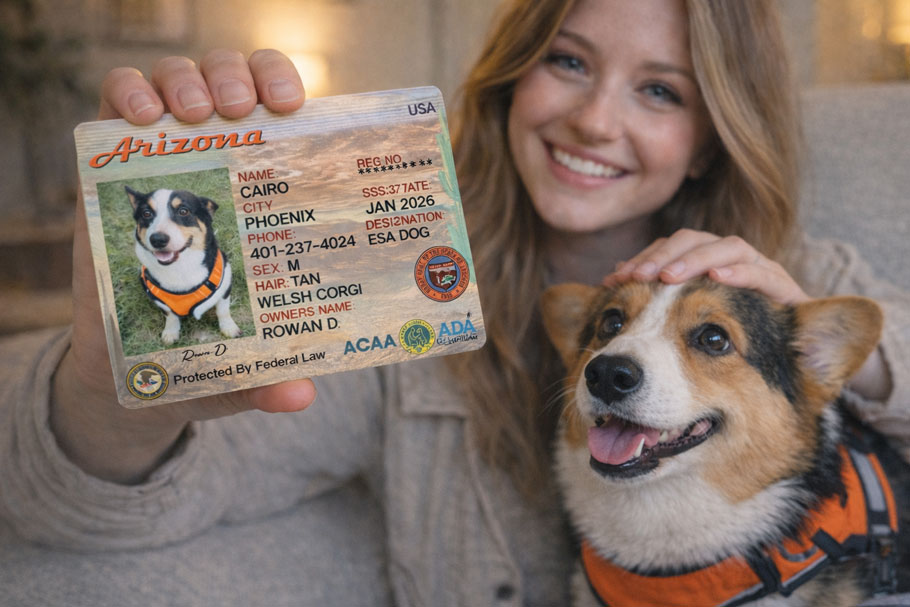
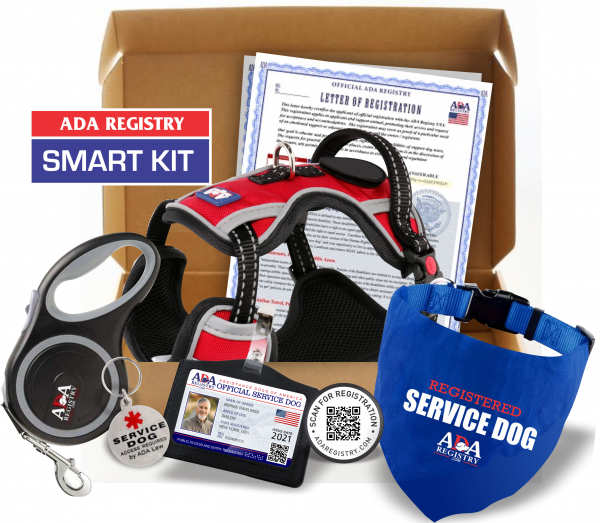
Many third-party sites sell ESA “registration” packages, ID cards, or certificates. These are not the same as a local dog license and are generally not required for city licensing. Focus on local licensing through official offices and keep rabies documentation current.
Frequently Asked Questions
Start with your local city hall if you live inside city limits (for example, the City of Jackson or City of Lakefield). If you live in a rural area or you’re unsure which office handles your address, call the Jackson County Sheriff’s Office and ask which local office issues dog licenses for your jurisdiction. Your service dog or ESA is typically licensed the same way as any other dog, because licensing is about local animal control and rabies compliance—not disability or housing status.
No. A dog license is a local permit/tag for identification and rabies compliance. A service dog is defined by disability law and the dog’s training to perform tasks related to a disability. Local licensing does not “make” a dog a service dog, and online “service dog registrations” are not a substitute for local licensing requirements.
Requirements vary by local office, but most commonly you’ll need proof of current rabies vaccination from a veterinarian, plus owner identification and basic dog/owner details. Some communities require that rabies records be “on file” at city hall before a license is issued.
Typically, yes. Service dogs and emotional support animals are generally still subject to public health and animal control rules, including rabies vaccination documentation and (where applicable) local licensing requirements.
If you’re outside city limits, the right licensing authority may differ by township or local agreements. Call the Jackson County Sheriff’s Office and ask who administers dog licensing and rabies enforcement for your specific address.
Register A Dog In Other Minnesota Counties
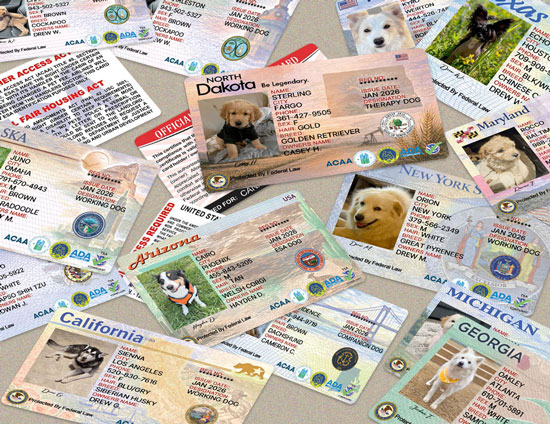
Select your county below to get started with your dog’s ID card. Requirements and license designs may vary by county, so choose your location to see the correct options and complete your pup’s registration.
- Aitkin County Dog Registration
- Anoka County Dog Registration
- Becker County Dog Registration
- Beltrami County Dog Registration
- Benton County Dog Registration
- Big Stone County Dog Registration
- Blue Earth County Dog Registration
- Brown County Dog Registration
- Carlton County Dog Registration
- Carver County Dog Registration
- Cass County Dog Registration
- Chippewa County Dog Registration
- Chisago County Dog Registration
- Clay County Dog Registration
- Clearwater County Dog Registration
- Cook County Dog Registration
- Cottonwood County Dog Registration
- Crow Wing County Dog Registration
- Dakota County Dog Registration
- Dodge County Dog Registration
- Douglas County Dog Registration
- Faribault County Dog Registration
- Fillmore County Dog Registration
- Freeborn County Dog Registration
- Goodhue County Dog Registration
- Grant County Dog Registration
- Hennepin County Dog Registration
- Houston County Dog Registration
- Hubbard County Dog Registration
- Isanti County Dog Registration
- Itasca County Dog Registration
- Kanabec County Dog Registration
- Kandiyohi County Dog Registration
- Kittson County Dog Registration
- Koochiching County Dog Registration
- Lac qui Parle County Dog Registration
- Lake County Dog Registration
- Lake of the Woods County Dog Registration
- LeSueur County Dog Registration
- Lincoln County Dog Registration
- Lyon County Dog Registration
- Mahnomen County Dog Registration
- Marshall County Dog Registration
- Martin County Dog Registration
- McLeod County Dog Registration
- Meeker County Dog Registration
- Mille Lacs County Dog Registration
- Morrison County Dog Registration
- Mower County Dog Registration
- Murray County Dog Registration
- Nicollet County Dog Registration
- Nobles County Dog Registration
- Norman County Dog Registration
- Olmsted County Dog Registration
- Otter Tail County Dog Registration
- Pennington County Dog Registration
- Pine County Dog Registration
- Pipestone County Dog Registration
- Polk County Dog Registration
- Pope County Dog Registration
- Ramsey County Dog Registration
- Red Lake County Dog Registration
- Redwood County Dog Registration
- Renville County Dog Registration
- Rice County Dog Registration
- Rock County Dog Registration
- Roseau County Dog Registration
- Scott County Dog Registration
- Sherburne County Dog Registration
- Sibley County Dog Registration
- St. Louis County Dog Registration
- Stearns County Dog Registration
- Steele County Dog Registration
- Stevens County Dog Registration
- Swift County Dog Registration
- Todd County Dog Registration
- Traverse County Dog Registration
- Wabasha County Dog Registration
- Wadena County Dog Registration
- Waseca County Dog Registration
- Washington County Dog Registration
- Watonwan County Dog Registration
- Wilkin County Dog Registration
- Winona County Dog Registration
- Wright County Dog Registration
- Yellow Medicine County Dog Registration